

Therapeutic Plasma Exchange · A Patient's Story · Scottsdale, Arizona
What a TPE Session Is Really Like
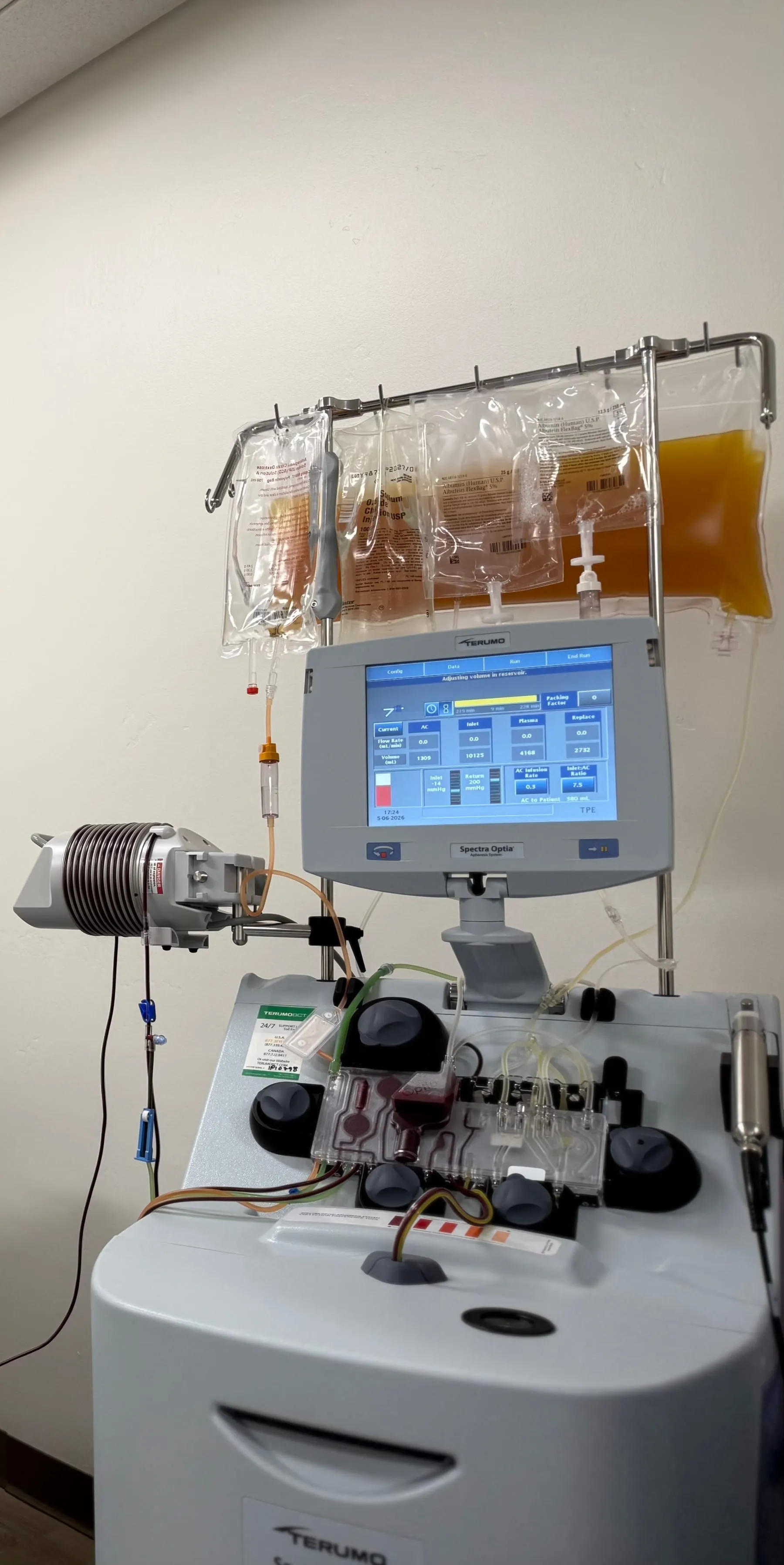
The honest, jargon-free version of a therapeutic plasma exchange session — from someone who sat in the chair, not from a doctor.
Most of what's written about therapeutic plasma exchange is written by people who have never actually had it done to them. I'm the opposite. I have no medical background at all — I'm a lawyer by trade — and in May I sat in the chair and went through a full therapeutic plasma exchange session start to finish. So this isn't the clinical version. It's the normal-person version: what the day actually felt like, what caught me off guard, and the handful of things I'd tell a friend before their first appointment.
If you want the clinical mechanics — how the machine separates and swaps your plasma — that's covered on our main therapeutic plasma exchange in Scottsdale page. This page is the human part.
This is one person's experience, not medical advice. I'm not a clinician, protocols differ from patient to patient, and your session may look nothing like mine. Always go by what your own care team tells you.
The Prep Starts Days Before, Not at the Clinic
I assumed "the appointment" was the appointment. It isn't. A couple of days ahead, they had me get labs — partly to check my calcium, and partly to see how thick my blood is. That second one turned out to matter more than I expected. Apparently guys who lift and stay active tend to run thicker blood, and, surprise, that was me.
Thicker (more viscous) blood makes the pumps work harder, which can stretch out your session. Which brings me to the single most useful thing I can tell you.
Drink Water Like It's Your Job
If you take one thing from this whole page, take this: hydrate, and start days early. My blood was viscous going in, the pumps had to grind harder, and my session ran longer because of it. Water is the cheapest, easiest lever you have, and almost nobody drinks enough before they show up. Don't be me.
Skip the Fatty Dinner (Learn From My Pasta)
The night before, I had pasta with butter and cheese. Delicious. Also a mistake. The moment they switched the machine on, they could see the fat in my plasma — and I got a friendly round of "so… what did you eat last night?" Turns out lipids show up immediately and unmistakably. Do future-you a favor and keep dinner lean the night before.
Getting Hooked Up: A Needle in Each Arm
Here's the part people brace for. There's a needle in each arm. One arm connects to the TPE machine. The other gets a smaller needle that's there to give you calcium during the session (more on why in a second). I also had a blood pressure cuff on, and it checks you automatically as things go.
The chair itself is genuinely comfortable — a proper recliner, a pillow to prop my hands, feet up. And good news for the phone-addicted: my non-dominant arm had the small line, so I still had a hand free to scroll the whole time.
That calcium line isn't random. The anticoagulant they use (citrate) can temporarily drop your usable calcium, which some people feel as tingling in the lips, face, or fingers. If you feel it, say so — they'll adjust. It's routine, not an emergency.
The One Rule I Broke: Don't Move Your Arm
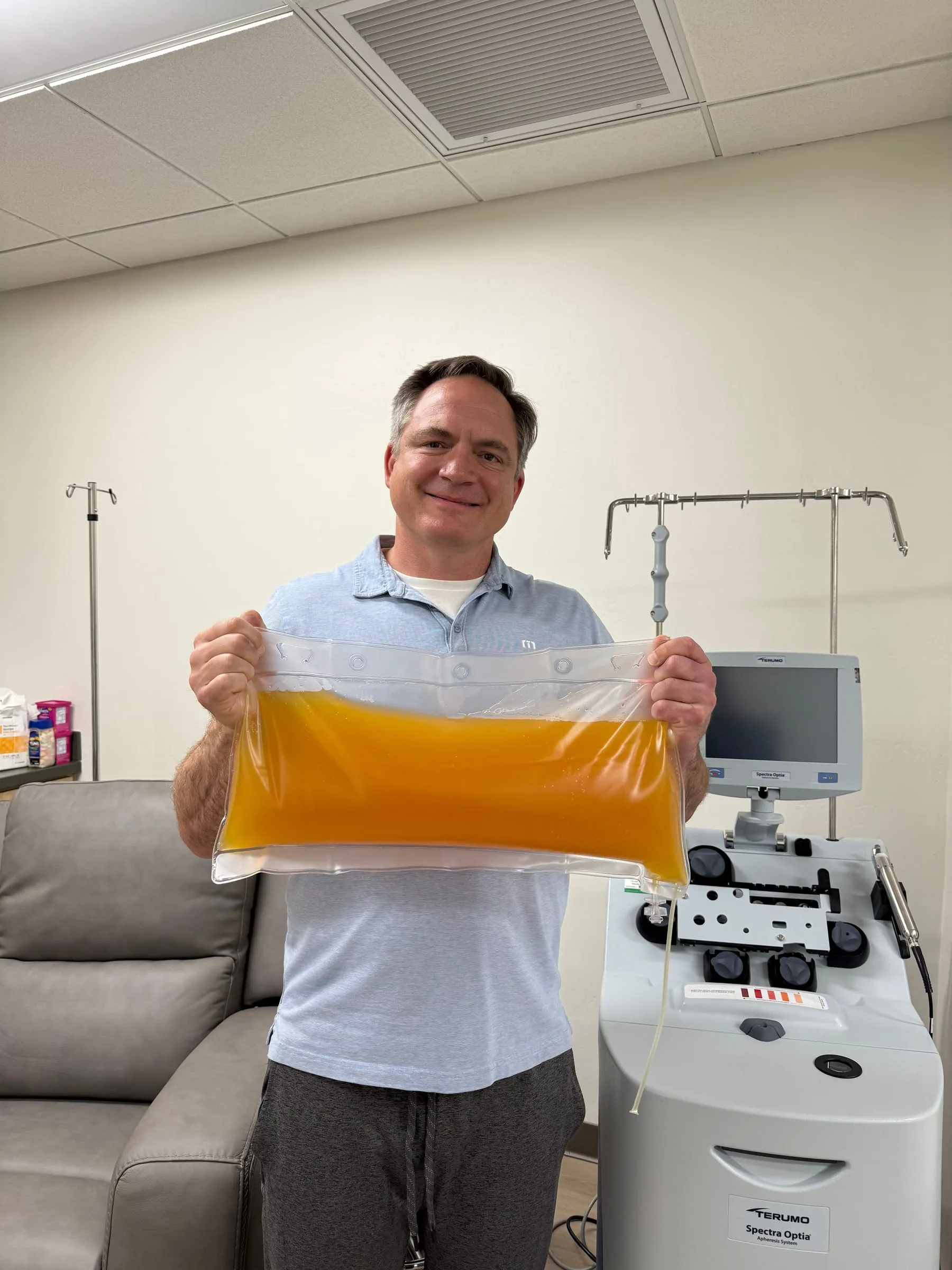
They tell you to keep your needle arm still. I nodded, felt confident, and then slowly slid down in the chair over the next while like a kid in a movie theater. When I shifted to fix it, I tugged the arm with the line, and I'm pretty sure I wrecked the first needle placement. They had to pull it and stick me a second time in the other spot. Afterward they taped around my arm — partly to secure it, partly, I suspect, as a polite reminder to knock off the fidgeting. Learn from me: get comfortable at the start, then hold still.
Wear the Sweatpants
You're going to be in that chair for a few hours, and you may need a bathroom trip mid-session (with lines still attached, so nothing complicated, just a shuffle). Comfortable, loose clothes make all of that easier. Sweatpants are the move. This is not the appointment to dress up for.
Charge Your Phone — and Do NOT Binge Your Show First
Bring entertainment, and bring more than you think you'll need. A few hours is a long sit. Yes, there's a charger available, but between all the lines and tubes I tried to avoid reaching for it, so I'd just show up at full battery. And a genuine tip from experience: don't burn through the last couple of episodes of your favorite show the week before. Save them. At Avinity the chairs face TVs with the usual streaming services loaded up, so bring a queue, not an empty watchlist.
My TPE Cheat Sheet
- 1Hydrate for days beforehand. Viscous blood = slower session. This is the big one.
- 2Keep dinner lean the night before. Fatty food shows up in your plasma instantly.
- 3Wear comfortable clothes. Sweatpants. You'll be there a few hours.
- 4Show up with a charged phone. There's a charger, but the fewer cords to juggle, the better.
- 5Bring a watchlist. Don't finish your favorite show the week before — save it for the chair.
- 6Get comfy, then hold your arm still. Moving it can blow the line (ask me how I know).
- 7If you experience any tingling. Speak-up It's usually calcium-related and easy to adjust.
- 8Line up a ride for your first time. Until you know how you'll feel, don't assume you'll drive.
How I Felt Afterward
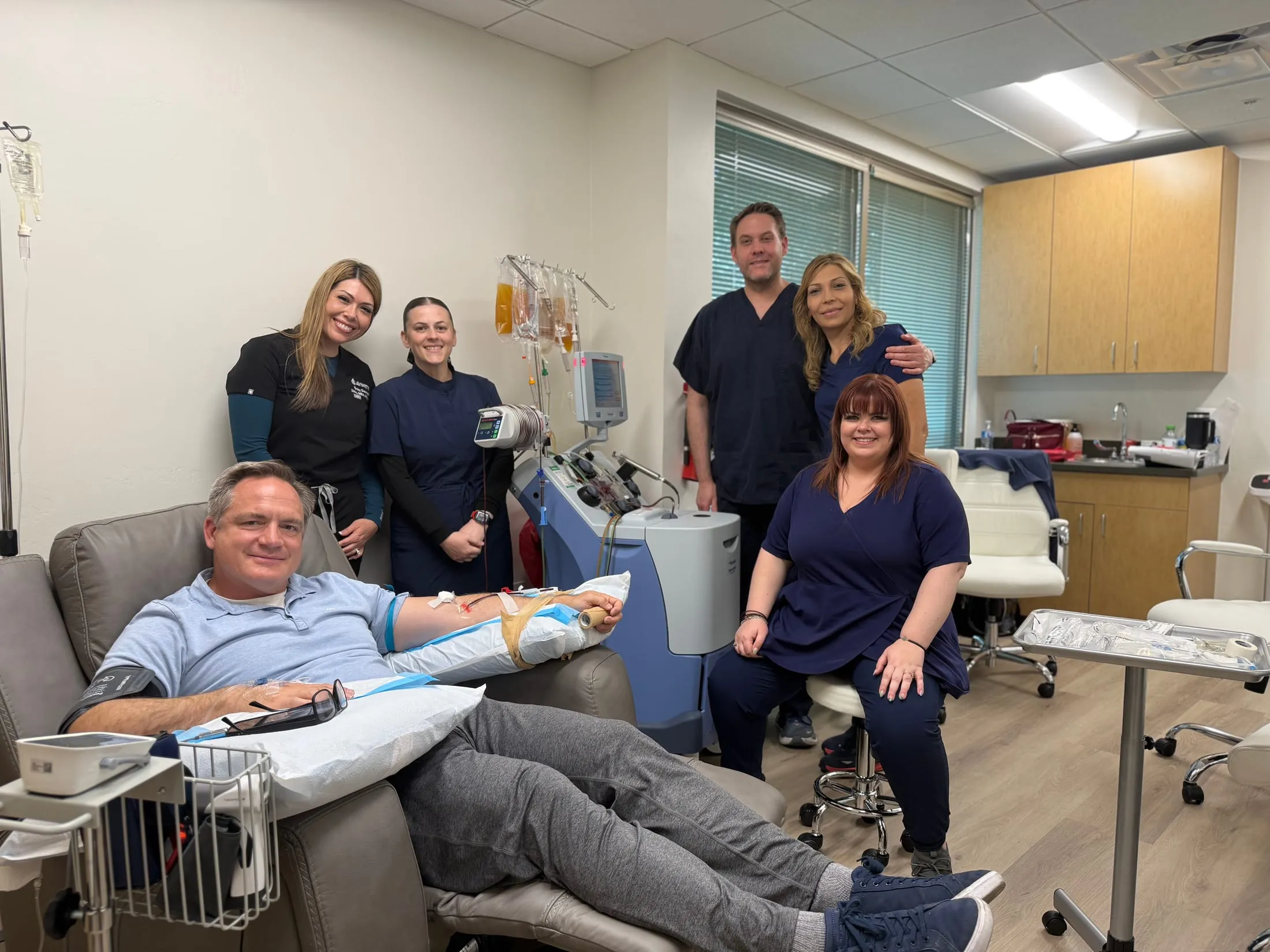
I'll be honest: right after, I was wiped. Once the target amount was exchanged, the machine returned what was left in the tubing, they pulled the lines, held pressure on the sites, and checked me over one more time before I stood up. I felt a little beat up, got home, and basically slept straight through until morning.
Then came the flip side. The next morning — and for weeks after — I had a ton of energy and honestly felt the best I've felt in years. The best way I can describe it is my body running on all cylinders. That's my experience, and yours could be completely different, but that contrast — a rough first night, then a great few weeks — is the honest version for me.
The bigger takeaway is that a TPE session is long but not dramatic. The annoying parts are sitting still and staying patient. Good hydration and a good team make the whole thing much smoother. The physician-directed side of all this — the protocol, the oversight, and who it's actually for — is laid out on Avinity's main plasmapheresis page. And if the question on your mind is what it runs, they publish how much therapeutic plasma exchange costs and what drives the number.