

Medical Aesthetics
RF Microneedling vs Microneedling: Worth 3x the Cost?
By Emily Dawson, MSN, RN8 min read
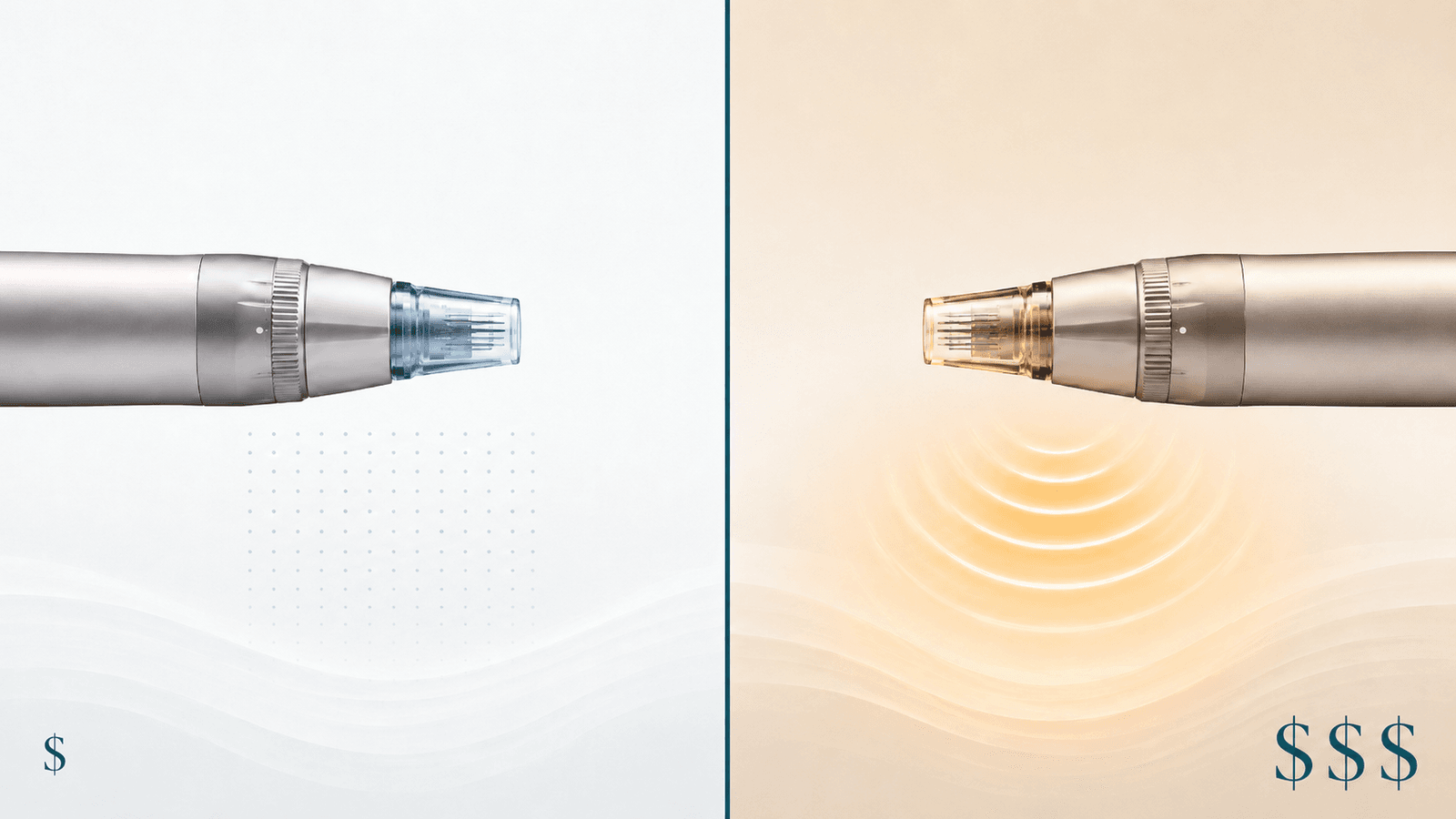
One of the questions I hear most often is, “Do you offer Morpheus8?”
The answer is no, and that was a very intentional decision.
We carefully evaluated adding an RF microneedling device to our practice. After reviewing the available research, the costs, and the potential risks, we decided that traditional microneedling aligns better with the results and philosophy of care we want to provide.
That doesn’t mean RF microneedling is the wrong treatment for everyone. It simply means I believe patients deserve an honest explanation of the differences before deciding whether it’s worth the additional cost.
The Short Answer
When comparing RF microneedling vs microneedling, the difference comes down to cost, downtime, and risk. Traditional microneedling typically costs $300–700 per session with a day or two of mild redness, while RF microneedling (Morpheus8) costs $800–1,500 or more and carries a different risk profile, including a 2025 FDA safety communication on serious complications.
Part of the reason this conversation has become so common is because RF microneedling exploded in popularity after celebrities began openly sharing their treatments. When Kim Kardashian posted about Morpheus8, calling it a “game changer” and admitting it was “painful lol but worth it,” interest in RF microneedling skyrocketed. Since then, I’ve had a steady stream of patients asking specifically about Morpheus8, not necessarily because they know how it works, but because they’ve seen it on social media.
I completely understand the appeal. But whenever a treatment becomes incredibly popular, I think it’s even more important to look beyond the marketing and understand both the potential benefits and the potential risks before deciding whether it’s the right choice.
Understanding the Difference
Traditional microneedling has been around for years because it’s effective and straightforward. Tiny sterile needles create controlled micro-injuries in the skin, stimulating your body’s natural production of collagen and elastin. Over time, this natural healing process helps improve skin texture, soften fine lines, reduce the appearance of acne scars, minimize pores, and enhance overall skin quality.
While many patients notice improvements after a single treatment, collagen remodeling is a gradual process. For the best results, I typically recommend a personalized series of treatments based on your skin concerns and goals.
RF (radiofrequency) microneedling builds on that same concept by delivering radiofrequency energy through the needles into deeper layers of tissue. The goal is to stimulate collagen while adding controlled thermal energy, which may provide additional tissue tightening and remodeling in some patients.
RF microneedling isn’t necessarily a “better” version of traditional microneedling. It’s a different technology. The added radiofrequency energy may offer additional benefits for certain concerns, but it also changes the treatment’s cost, downtime, and risk profile.
Why Is RF Microneedling So Much More Expensive?
In Scottsdale, traditional microneedling typically ranges from $300–700 per treatment, while RF microneedling often costs $800–1,500 or more per session.
Some of that higher price is completely understandable. These devices are expensive to purchase, require disposable treatment tips, and represent a significant investment for a practice.
The more important question isn’t simply why it costs more. It’s whether the additional cost provides meaningful benefits for your specific skin concerns.
For some patients, it absolutely does.
For many others, traditional microneedling can achieve their goals without the added expense.
| Traditional Microneedling | RF Microneedling | |
|---|---|---|
| Cost per treatment | $300–700 | $800–1,500+ |
| Best for | Improving skin texture, fine lines, pores, acne scars, and overall skin quality | Similar concerns, with the potential for additional skin tightening in appropriate patients |
| Downtime | Mild redness (typically 1–3 days) | More swelling and downtime |
| How it works | Controlled micro-injuries stimulate collagen production | Microneedling combined with radiofrequency heat to stimulate collagen and thermal remodeling |
The FDA Safety Communication
There’s another reason I think it’s important to have this conversation.
While RF microneedling was becoming one of the fastest-growing aesthetic treatments, the U.S. Food and Drug Administration (FDA) was also taking a closer look at its safety profile.
On October 15, 2025, the FDA issued a safety communication regarding RF microneedling devices. The agency stated:
“The FDA is aware of reports of serious complications (adverse events) including burns, scarring, fat loss, disfigurement, and nerve damage, and the need for surgical repair or medical intervention to treat injuries.”
It’s important to understand what that means.
This is not a ban. The FDA did not say RF microneedling devices are unsafe or that these complications are common. Rather, the agency is informing providers and patients that serious adverse events have been reported and that these risks should be discussed before treatment.
The FDA safety communication addresses RF microneedling devices as a category and does not conclude that these complications occur with every treatment or every device.
As a nurse, I believe patients deserve that transparency so they can make an informed decision.
The Risk I Discuss Most With Patients
When I talk with patients about RF microneedling, the potential complication I spend the most time discussing is unintended fat loss.
Facial fat plays an important role in maintaining a youthful appearance. If radiofrequency energy reaches the wrong depth or is delivered using inappropriate settings, there is potential for damage to underlying fat tissue.
While this is considered uncommon when treatments are performed appropriately, it’s an important risk to understand because facial volume loss can be difficult, and sometimes expensive, to correct.
That doesn’t mean RF microneedling shouldn’t be performed. It means it should be performed thoughtfully by experienced medical professionals who understand facial anatomy, patient selection, and appropriate treatment settings.
Choosing the Right Provider Matters
As demand for RF microneedling has grown, these devices have become available in many different practice settings.
That makes provider experience more important than ever.
If you’re considering RF microneedling, ask:
- Who is performing the treatment?
- What training have they received on that specific device?
- How much experience do they have?
- What is their approach to treatment settings?
- What is the plan if a complication occurs?
Those are reasonable questions to ask before any medical aesthetic procedure.
What About Traditional Microneedling?
Traditional microneedling isn’t risk-free.
You’ll likely experience redness for a day or two, and like any procedure that creates tiny openings in the skin, there is a small risk of infection if proper sterile technique isn’t followed.
That’s why I believe microneedling should always be performed in a medical setting using sterile equipment and evidence-based protocols.
The important distinction is that traditional microneedling does not use thermal energy, so it doesn’t carry the same heat-related risks associated with RF technology.
When RF Microneedling May Be the Better Choice
I also believe it’s important to acknowledge that traditional microneedling isn’t always the best treatment for every concern.
If your primary concern is moderate skin laxity, or if you’re hoping to achieve additional tissue tightening beyond what traditional microneedling can typically provide, RF microneedling may offer added benefit.
Some studies also suggest RF microneedling may improve certain acne scars more effectively by combining collagen stimulation with thermal remodeling.
That said, traditional microneedling remains an excellent, evidence-based treatment for many patients with acne scarring, skin rejuvenation, and overall skin quality.
Good medicine means recommending what’s right for the patient, not simply recommending the treatment you have available.
When Traditional Microneedling Makes More Sense
Most of the patients I see aren’t looking for dramatic skin tightening.
They’re looking to improve:
- Skin texture
- Fine lines
- Enlarged pores
- Acne scars
- Overall skin quality
For those concerns, a personalized series of traditional microneedling treatments often provides excellent results while costing significantly less than RF microneedling.
Collagen remodeling takes time, which is why I typically recommend a series of treatments rather than expecting everything from a single session. For many patients, completing that series provides outstanding results without the added cost or thermal energy associated with RF technology.
The question isn’t whether RF microneedling works. It absolutely can. The question is whether its additional benefits justify the higher cost, increased downtime, and different risk profile for your specific goals.
My Philosophy at Avinity
Every microneedling at Avinity treatment is performed by me personally, in our physician-guided clinic.
I customize needle depth, treatment intensity, and your treatment plan based on your skin, not a one-size-fits-all protocol.
My goal isn’t to recommend the most expensive treatment.
My goal is to recommend the treatment that’s most likely to help you achieve your goals safely, effectively, and honestly.
If I believe another treatment, or even another provider, is a better fit for your concerns, I’ll tell you.
That’s the kind of care I would want for my own family, and it’s the standard I believe every patient deserves.
The Bottom Line
Technology alone doesn’t determine results. The provider performing your treatment, the treatment plan, and choosing the right procedure for your skin are just as important as the device itself.
The best treatment isn’t determined by what’s trending on social media. It’s determined by your skin, your goals, and an honest conversation about what each treatment can realistically achieve.
Sometimes that means traditional microneedling.
Sometimes that means RF microneedling.
My job isn’t to convince you one treatment is better than another. My job is to help you choose the treatment that’s actually right for you.