A natural alternative to under-eye filler for hollows, dark circles, and tired-looking eyes. Selphyller® takes the platelet-rich fibrin matrix prepared from your own blood and transforms it with controlled heat into a smooth injectable plasma gel. You can see soft, natural-looking volume the day it is placed, while your platelets and growth factors continue supporting collagen production and skin quality for months afterward. The result is an under-eye treatment that addresses both volume loss and the quality of the skin itself.
Free consultation · No commitment required · Serving Scottsdale, Paradise Valley, Phoenix and Arizona
5.0 · 24 Google reviewsUnder-Eyes and Tear Troughs
Many patients who find this page started by searching for under eye filler in Scottsdale, tear trough filler, or dark circles treatment. They want to look more rested and refreshed, but they may also be interested in an option that does more than simply restore lost volume.
Selphyller plasma gel offers a different approach to under-eye rejuvenation. It is created from your own platelet-rich fibrin matrix and provides soft volume in the tear trough while also delivering platelets and growth factors that support your skin's natural collagen production.
A natural approach to under-eye volume. Traditional hyaluronic acid filler can be an excellent option for appropriately selected patients, particularly when precise volume or structural support is needed. Selphyller offers another option for patients who prefer an autologous treatment made from their own blood components. The plasma gel is gradually resorbed by the body while the regenerative process it supports may continue beyond the initial volumizing effect.
A material chosen for thin skin. Hyaluronic acid is a clear gel that attracts water, and in the very thin skin below the eye those properties make product selection, depth, and volume especially important, which is why careful injectors treat the tear trough conservatively with any material. Selphyller is not a clear gel and does not rely on hyaluronic acid for its volume, which is one of the reasons patients ask about it for this area.
Better skin, not just added volume. The platelet-rich fibrin matrix contains growth factors that support collagen production and overall skin quality. This makes Selphyller especially appealing in the under-eye area, where hollowness, fine lines, crepey texture, and shadowing can contribute to a tired appearance.
If you have been considering under eye filler in Scottsdale but are interested in a natural filler alternative that combines volume restoration with regenerative benefits, Selphyller PRFM may be an excellent option to explore.
Book an Under-Eye Consultation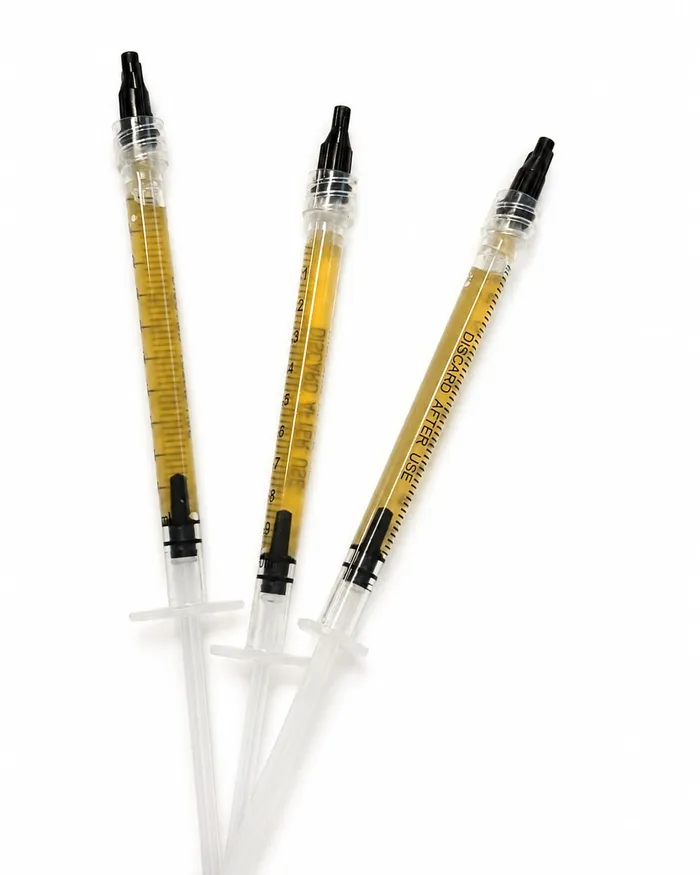
The Honest Conversation
Say it out loud, because almost everyone in our chair has thought it. For most patients the biggest hesitation is not the product. It is the idea of anything being injected that close to their eye. That fear is normal, it is reasonable, and it deserves a real answer instead of a brushed-off "you'll be fine."
Here is the real answer.
Nothing goes near your eye itself. Under-eye treatment is placed in the tear trough, the groove along the bone of your cheek below the eye socket. The gel sits on and above that bone, in the tissue under the skin. It does not go into the eyelid, and it never touches the eye.
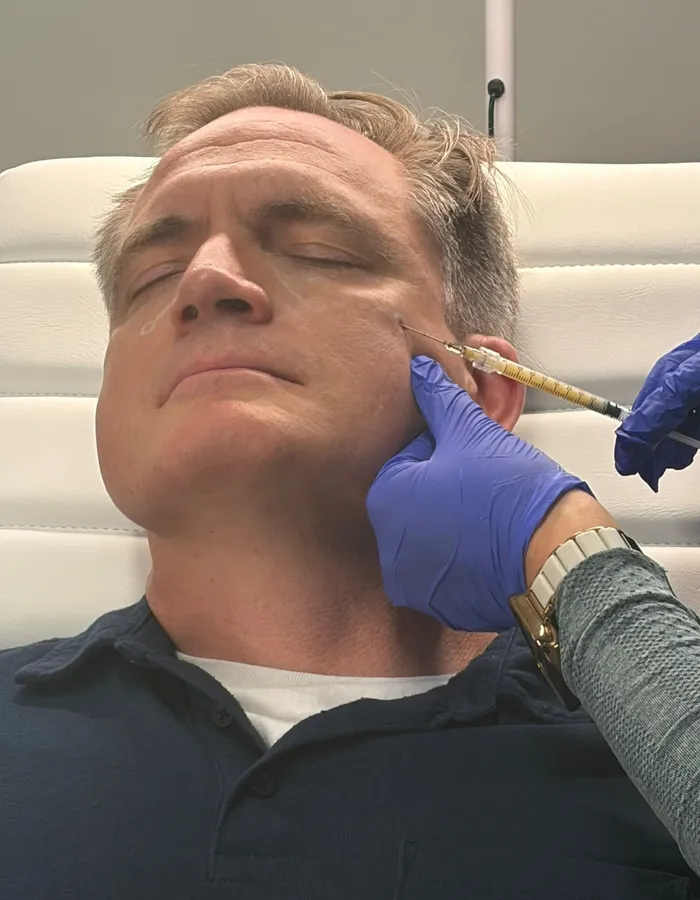
We usually do not use a needle under the eyes at all. Under-eye placement at Avinity is typically done with a cannula, a thin, flexible instrument with a rounded tip instead of a sharp point. It enters through a single small opening in the cheek, well away from the eye, and glides under the skin to place the gel. Because the tip is blunt, it pushes past blood vessels rather than piercing them, which is why cannula placement is associated with less bruising and a wider margin of safety in this area.
Your injector is a nurse with more than 15 years behind her. Every under-eye treatment at Avinity is performed by Emily Dawson, DHA, MBA, MSN, RN, our co-founder and Clinical Director. Emily has been a registered nurse for over 15 years, is an experienced injector, and is certified in this procedure. Under-eye work is the most technique-dependent injection on the face, and it is not a procedure we delegate.
You are numb, and you are in control. Topical numbing is applied while your gel is being prepared, so by the time placement begins the area is comfortable. Most patients say the sensation is pressure, not pain, and many say the blood draw was the hardest part. You can ask to pause or stop at any point, and we mean that.
The material is your own. Selphyller is prepared from your own blood components, which is what draws a lot of patients to it in the first place, and it is worth knowing about if you would rather not have a synthetic material placed in this area. Unlike hyaluronic acid filler, it is not dissolved with hyaluronidase. The plasma gel is gradually resorbed by your body over time.
If you have wanted this treatment for years and the needle is what stopped you, come in and talk it through. The consultation is free, nothing is injected at a consultation, and plenty of our patients booked one just to ask these questions.
Ask Us Anything at a Free Consultation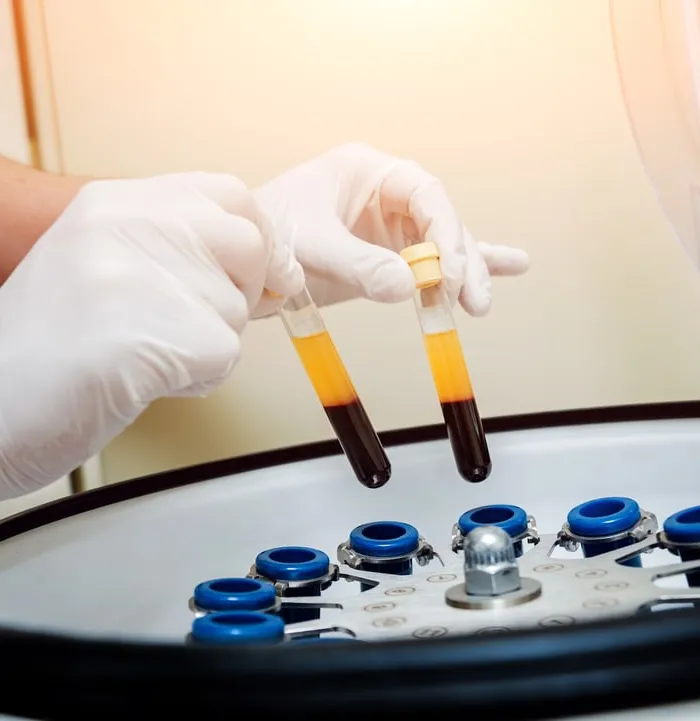
Patient Experiences
Transparent Pricing
The cost of plasma gel in Scottsdale is published upfront, so you can compare Selphyller with under-eye filler and other treatment options before deciding what makes sense for you.
One price covers the entire visit: your blood draw, the Selphyl® kit, preparation, numbing, and the treatment itself. There are no per-unit charges, separate preparation fees, or unexpected additions at the end.
Your consultation is complimentary, and you will know the exact price before anything is scheduled. We map the treatment areas first, whether that is the under-eyes on their own or the under-eyes and temples together, then tell you how many vials that takes. The number you hear at the consultation is the number you pay on the day.
Most patients find the value shows up across a short series rather than in a single visit, which is why the package of three is priced the way it is. If one treatment is all you need, we will tell you that instead.
Plasma Gel vs Under-Eye Filler
Both treatments can restore volume, but they achieve their goals in different ways.
Hyaluronic acid dermal filler is an excellent tool for restoring volume, creating contour, and providing structural support. Depending on the product and the treatment area it can offer precise, predictable correction, and it remains one of the treatments we use every week at Avinity Health.
Selphyller plasma gel takes a different approach. It is prepared from your own platelet-rich fibrin matrix and provides soft volume the day it is placed, while releasing growth factors into the surrounding tissue over time. That allows one treatment to address both volume loss and skin quality. The volume you see on day one is only the first half of what it does.
For patients who prefer a treatment made from their own blood components, or whose goal is subtle rejuvenation with regenerative benefits, Selphyller can be an excellent alternative to traditional filler. For patients who want stronger projection, contour, or structural support, hyaluronic acid filler may be the better choice. In many treatment plans the two complement each other.
| Selphyller® Plasma Gel | Hyaluronic Acid Filler | |
|---|---|---|
| What it is made of | Your own platelet-rich fibrin, thickened with heat | Manufactured cross-linked hyaluronic acid |
| How it looks and feels | Soft, subtle volume, designed to integrate with the surrounding tissue | Product-dependent, from soft volume through to firm structural support |
| Regenerative effect | Delivers platelets and growth factors that support collagen production | Designed primarily for volume, contour, and structural support |
| Allergy or hypersensitivity risk | Autologous, prepared from your own blood components | Low. Generally well tolerated when appropriately selected |
| How the material behaves | Does not rely on hyaluronic acid for volume, and resorbs naturally | Hyaluronic acid attracts water, with behavior varying by product and placement |
| Longevity | Volume resorbs gradually while collagen support develops over time | Varies by product, treatment area, and individual metabolism |
| Under the eyes | Soft volume plus regenerative support in thin skin | Precise correction, with product choice and depth doing the work |
| How it resolves | Resorbs gradually on its own | Metabolizes gradually, and can be dissolved with hyaluronidase |
| Blood draw required | Yes | No |
| Best suited to | Under-eyes and areas where subtle volume and skin quality are the priority | Areas needing precise volume, contour, projection, or structure |
If your concern is a true bag, a pocket of fat pushing forward under the eye rather than a hollow beside it, no injectable will fix it, ours included. That is a surgical problem, and if we see it at your consultation we will say so and point you to an oculoplastic surgeon rather than sell you a series of anything.
These are two different tools, and the best choice depends on your anatomy, your goals, and the area being treated. In some cases the most effective plan uses both. Here is how we think about it:
We will map this out with you at your consultation, and recommend dermal fillers where they are the better answer. The goal is the right result, not the bigger sale.
How It Works
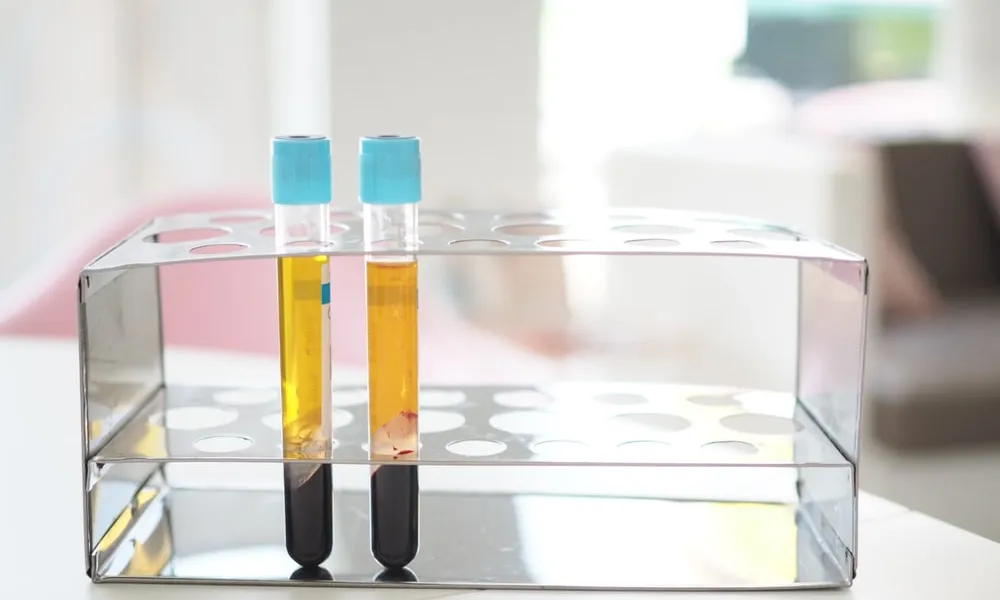
Plasma gel starts the same way our Selphyl PRFM microneedling treatment starts. We draw a small amount of your blood and spin it, which separates the red and white blood cells from the part we want: the clear golden plasma that carries your platelets. That plasma moves into a second tube, where your blood forms a soft natural mesh that holds the platelets in place. Platelets are the cells your body already uses to repair itself, and they carry the growth factors that tell your skin to build new collagen.
For microneedling, that matrix is worked into the skin as is. For Selphyller, it goes one step further. Controlled heating changes the structure of the plasma proteins and thickens the matrix into a smooth, cohesive, injectable gel, dense enough to hold shape when it is placed and soft enough to sit naturally under the skin.
Nothing is added to make that happen. No hyaluronic acid, no synthetic polymer, no cross-linking agent, no donor material. The only inputs are your blood, the sodium citrate and calcium chloride used to prepare it, and heat.
That is what distinguishes plasma gel from traditional hyaluronic acid dermal filler. Hyaluronic acid fillers are specifically formulated to restore volume, shape, and structural support. Selphyller is prepared from your own blood components in the same appointment, and combines a volumizing effect with the regenerative properties of platelet-rich fibrin matrix, which keeps releasing growth factors into the surrounding skin.
Book a Consultation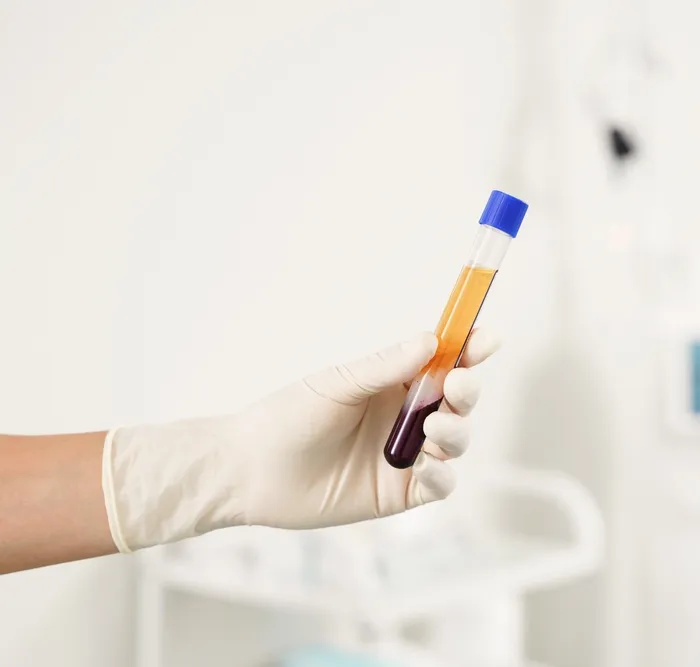
Selphyller addresses two aspects of facial rejuvenation at the same time. The plasma gel provides soft volume you can see the day it is placed, while the platelet-rich fibrin matrix delivers growth factors that support collagen production and skin quality over the following weeks and months. That combination is why plasma gel is sometimes described as a regenerative filler or a natural filler alternative. The initial volume changes gradually as the gel is resorbed, while the collagen response the treatment supports may continue contributing to the appearance and quality of the skin over time.
Compare with Dermal Fillers →Treatment Areas
Plasma gel goes where you want a natural, rested result, and where skin quality matters as much as volume.
The under-eye area is one of the most popular applications for plasma gel, and where most of our patients start. Selphyller can soften the appearance of tear trough hollowing and shadowing, while its platelet-rich fibrin matrix supports collagen production and skin quality in the delicate skin around the eye. For patients researching under eye filler or tear trough filler who are interested in an autologous option, plasma gel offers a different approach to under-eye rejuvenation.
Temple hollowing is one of the earliest and most under-treated signs of facial volume loss, and it is an area where soft, diffuse volume is often exactly what is needed. For patients looking for temple filler in Scottsdale, plasma gel can be an excellent option when the goal is soft, diffuse volume combined with regenerative support, and it is a common starting point.
Early flattening and loss of fullness across the cheek, where the goal is restoring softness rather than building projection. Well suited to patients who want to look less tired without looking treated, and a natural cheek filler alternative for anyone who prefers a treatment made from their own blood components.
Rapid weight loss, including on GLP-1 medications, often leaves the temples, cheeks, and under- eyes looking deflated. Because plasma gel addresses soft volume and skin quality at the same time, it can be an appealing option for the changes patients describe as "Ozempic face."
Softening the fold itself along with the skin quality around it. Published work on injected platelet-rich fibrin matrix in this area described new collagen deposition beginning around day seven and continuing for weeks afterward.
Fine lines around the mouth and the loss of definition that comes with them. The regenerative effect is particularly valuable here, where thinning skin and repeated movement are both driving the problem.
Thin, sun-exposed skin that has lost density, the areas that age visibly in Arizona and get treated least. Hand rejuvenation and neck treatment are frequently addressed in the same appointment as the face.
Restoring support and skin quality along the lower face, softening early jowling and improving the texture of the skin over it. Frequently combined with structural filler when sharper jawline definition is also on the list.
Who Should Get It
Selphyller plasma gel is often a good fit for:
Plasma gel depends on your own platelet health, so candidacy is assessed the same way it is for PRFM. Patients on blood thinners, with certain platelet or clotting conditions, with active skin infection in the treatment area, or who are pregnant or breastfeeding may not be candidates. If plasma gel is not right for you, we will tell you and explain what is.
Find Out If Plasma Gel Is Right for You
Book a ConsultationPlasma gel works on two different timelines, and that is the reason patients keep coming back to it.
Immediate soft volume, plus swelling that exaggerates it at first
Swelling settles and the true result emerges; the gel keeps releasing growth factors
Collagen support and changes in skin quality continue developing, often most noticeable under the eyes
The gel gradually resorbs while the regenerative response it supported may continue contributing to skin quality
The volumizing effect is temporary and changes gradually as your body resorbs the gel. How long it stays visible varies with the treatment area, your individual metabolism, the technique used, and other patient-specific factors, and typically holds for several months.
The regenerative component follows a different timeline. The platelets and growth factors held in the fibrin matrix support your body's own collagen response, which may keep contributing to skin quality even as the initial gel volume diminishes. Published work on injected platelet-rich fibrin matrix described new collagen deposition beginning around day seven and continuing for weeks afterward.
That is the difference patients tend to appreciate about Selphyller. You can see volume the day of treatment, and the treatment does not stop working there. Depending on your goals and how you respond, we usually recommend a series of two to three treatments spaced four to six weeks apart, followed by individualized maintenance once or twice a year.
Book a ConsultationYour Appointment
Total appointment time is approximately 60 to 75 minutes, most of it preparation and numbing. Most patients return to normal activities the same day, with some swelling and the possibility of bruising at injection points. Under-eye filler recovery with plasma gel is typically two to seven days of mild swelling.
Before anything is drawn, we look at your face at rest and in movement and agree on exactly where volume belongs, and where it does not. Plasma gel is placed to a plan, not distributed evenly.
A single small draw, collected directly into the Selphyl separator tube. Roughly the volume of a routine lab test.
Your sample spins for about six minutes, which settles the red and white blood cells at the bottom and leaves the clear golden plasma that carries your platelets. That plasma moves into a second tube, still sealed the whole time, where your blood forms a soft natural mesh that holds the platelets together.
That mesh is warmed under carefully controlled conditions until it thickens into a smooth, even gel. This is the step that turns a skin-repairing treatment into a volumizing one, and because the matrix itself is what thickens, it takes minutes rather than the longer processing a separate albumin step requires.
Nothing is added during this step. The gel is your own material, restructured.
Topical numbing is applied while your gel is prepared. Most patients describe the injections themselves as comparable to or more comfortable than dermal filler.
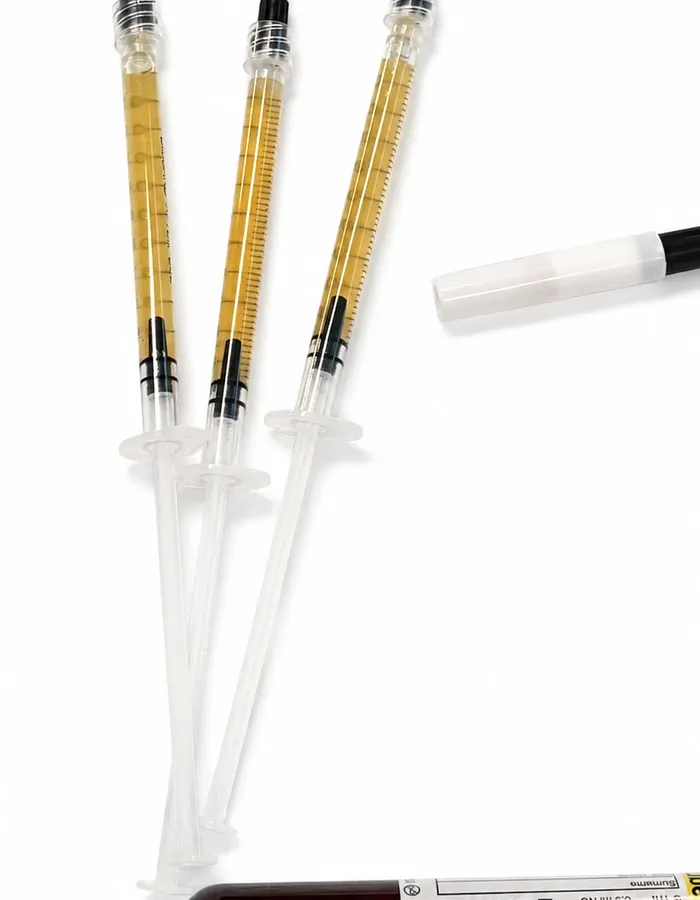
The gel is injected into the mapped areas, typically with a cannula in regions where that reduces bruising risk, including under the eyes. Placement is conservative and staged. We would rather bring you back than overfill.
Not All Plasma Gels
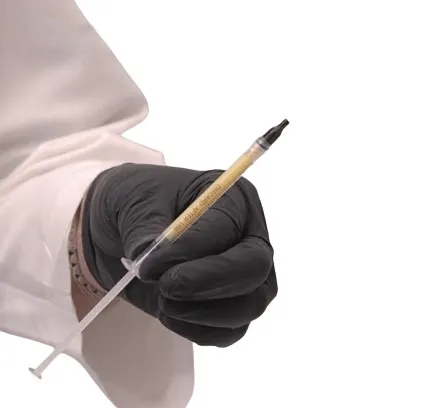
"Plasma gel," "bio filler," and "PRF filler" are category names, not products. What is actually in the syringe depends entirely on how it was prepared, and if you are comparing bio filler in Scottsdale, this is the question to ask.
Different plasma gel preparation methods use different components of your plasma. The most common approach on the market thickens the gel by adding albumin recovered from platelet-poor plasma, the thin, platelet-depleted layer left over after separation. It works, and it produces a dense gel, but the volumizing bulk comes from a protein-rich fraction that carries comparatively few platelets, so the volume and the regenerative payload come from two different fractions.
Selphyller is prepared directly from the platelet-rich fibrin matrix, using the Selphyl System and controlled heating, so the volumizing material and the platelet-rich matrix remain part of the same preparation. No platelet-poor fraction is added back in to bulk it up and no separate albumin step is required, which is also why preparation takes roughly half as long, keeping your appointment shorter and the sample handled less.
The gel is the platelet-rich fibrin matrix itself, thickened by heat, so the volume and the regenerative payload come from the same material rather than from two separate fractions.
Sodium citrate and calcium chloride to prepare it, then controlled heating. There is no synthetic thickener, no cross-linker, and nothing sourced from outside your own body.
The same Selphyl closed-transfer system we use for PRFM microneedling, which limits handling and keeps the preparation consistent from one appointment to the next.
Selphyller® is produced using the Selphyl® System, an FDA 510(k)-cleared device for preparing platelet-rich plasma and platelet-rich fibrin matrix from a patient's own blood at the point of care. No autologous plasma gel, from any brand, is an FDA-approved dermal filler, because it is your own tissue rather than a manufactured product. If you are comparing providers, it is a fair question to ask which system prepares theirs, because the preparation is what determines what is actually in the syringe. Read how Selphyller compares to other plasma gels →
Why Avinity
Plasma gel rewards precision. The preparation matters, because a pure PRFM gel prepared in a closed system behaves differently from an albumin-thickened one mixed in an open dish, and so does the judgment about exactly where it goes and how much. Both are why results vary so much between clinics offering what sounds like the same treatment.
Our approach to injectables does not change because the material is autologous. Placement is planned around your facial structure first, staged conservatively, and reviewed before more is added. The same principle that governs our filler protocol applies here: the plan comes before the needle.
Straight Answers
All injectable treatments carry potential risks, and a clinic that pretends otherwise is not being straight with you. The under-eye area requires particular attention to anatomy, product selection, and injection technique, and that is true of plasma gel and traditional dermal filler alike. The serious complication every injector trains against is injecting into a blood vessel, which can restrict blood flow and, in rare cases, damage skin or vision. It is uncommon, and it is the reason technique and anatomy knowledge matter more than anything else on this page. Treatment here begins with an assessment of your anatomy and your goals, to determine whether Selphyller, dermal filler, or another approach is the most appropriate.
Selphyller has characteristics that appeal to patients seeking an autologous treatment. Because it is prepared from your own blood components, it does not introduce synthetic hyaluronic acid into the treatment area. Under-eye placement is performed with a blunt-tip cannula where that is clinically appropriate, through a single entry point away from the eye, a technique that may help minimize bruising and tissue trauma. And every under-eye treatment here is performed by our Clinical Director, an injector nurse with more than 15 years of experience, with placement staged conservatively rather than fully corrected in one pass.
What you should expect: swelling for two to seven days, possibly a bruise at the entry point, and tenderness that fades within days. Less commonly, prolonged swelling or a surface irregularity as the gel settles, which typically resolves as it integrates. As with any injectable, rarer complications are possible, and we review all of this with you at your consultation, along with the reasons you might not be a candidate, before anything is booked.
For many patients with under-eye hollows, dark circles, or a tired appearance, yes. Plasma gel restores soft volume in the tear trough the way an under-eye filler does, and because it is prepared from your own platelet-rich fibrin matrix it also delivers growth factors that support collagen production and skin quality. Hyaluronic acid filler remains an excellent choice when precise volume, contour, or structural support is the goal. We offer both and recommend the one that fits your anatomy and your goals.
The under-eye is the least forgiving area on the face for any injectable, so the honest answer is that technique, anatomy, product selection, and conservative placement matter as much as the material itself. Selphyller appeals to patients who prefer an autologous option, because it is prepared from their own blood components rather than a synthetic material. Hyaluronic acid filler is generally well tolerated when appropriately selected and administered. The right choice depends on your anatomy and goals, which is what the consultation is for.
Pricing is flat and published: one vial, which treats most single areas such as both under-eyes, is $650, or $450 for your first visit. Two vials are $750, and a package of three treatments is $1,450. The price covers the draw, the preparation, and the placement, with nothing added at the end.
The soft volume typically holds for several months, varying with the treatment area, your individual metabolism, and the technique used. The collagen support your skin builds in response follows its own timeline and may keep contributing to skin quality as the gel is resorbed. Most patients do best with a series of two to three treatments, then maintenance once or twice a year.
Topical numbing is applied while your gel is prepared, and under-eye placement is usually done with a cannula. Most patients describe it as comparable to or more comfortable than traditional filler.
Expect mild swelling for two to seven days and the possibility of a bruise at the entry point. Most patients return to normal activities the same day. The true result emerges as swelling settles in the first week.
Usually, yes. If you still have hyaluronic acid filler in place, we may recommend dissolving it first so the plasma gel can integrate cleanly. If you are interested in exploring a different approach this time, plasma gel is often a good next step. If your existing filler is doing its job well, we will say so rather than replace it.
Selphyl is the FDA-cleared system used to prepare platelet-rich fibrin matrix from your blood. Selphyller is the plasma gel made from that matrix through a controlled heating step. Same system, one extra step.
They are related but different. PRF or PRFM under the eyes is injected as a liquid and works mainly on skin quality with little immediate volume. A vampire facial is PRP with microneedling. Plasma gel is PRFM converted to a gel, so it adds visible volume the day it is placed while delivering the same regenerative signal.
Those are category names rather than products. Many bio filler and PRF filler preparations are thickened with albumin recovered from platelet-poor plasma. Selphyller is prepared directly from the platelet-rich fibrin matrix, with nothing added but heat. If you are comparing providers, it is worth asking which system prepares theirs, because the preparation determines what is in the syringe.
The Selphyl System used to prepare Selphyller is FDA 510(k) cleared for preparing PRP and PRFM from your own blood. No autologous plasma gel from any brand is an FDA-approved dermal filler, because it is your own tissue rather than a manufactured product.
Under-eye hollows are often genetic and can show in the late twenties. Because plasma gel is prepared from your own blood components and is resorbed naturally, it is a reasonable first step for younger patients who would like a rested look and prefer to start with an autologous treatment.
Most patients do best with two to three sessions spaced four to six weeks apart, then maintenance once or twice a year. Some patients are satisfied after one.
Yes, and it often is. A common plan is plasma gel for the under-eyes and temples with hyaluronic acid filler for the jawline or chin and neurotoxin for expression lines. We map the combination at your consultation.
Service Areas
Avinity Health is located at 11000 N. Scottsdale Road, Suite 100, Scottsdale, AZ 85254, minutes from Gainey Ranch, Paradise Valley, Kierland, and McCormick Ranch. Patients across North Scottsdale come to Avinity Health for Selphyller plasma gel because it offers another option for treating under-eye hollows, dark circles, and tired-looking eyes with a regenerative treatment made from their own blood components.
We are on North Scottsdale Road just north of Shea Boulevard, about five minutes north of Gainey Ranch and 8 to 10 minutes south of Kierland Commons.
Whether you are searching for under eye filler near Paradise Valley, a natural filler alternative in Kierland, PRF bio filler in McCormick Ranch, or plasma gel near Gainey Ranch, the approach is the same: a complimentary consultation, a clear plan for where plasma gel will make the biggest difference to your face, and placement mapped before anything is drawn.
Our Location
11000 N. Scottsdale Road
Suite 100, Scottsdale, AZ 85254
Mon to Fri 9:00 AM to 5:00 PM
Sat 9:00 AM to 12:00 PM
Sun Closed
Other times available by appointment
Call Us
Find Us
Medically reviewed by Emily Dawson, DHA, MBA, MSN, RN, Clinical Director. Last reviewed August 31, 2026.
SELPHYL® and Selphyller® are registered trademarks of Selphyl, Inc. Avinity Health is an independent provider using the Selphyl system and is not affiliated with or endorsed by Selphyl, Inc. Selphyller plasma gel is an autologous preparation made from your own blood and is not an FDA-approved dermal filler. Individual results vary. This page is for general education and is not medical advice. Treatment suitability is determined during an in-person consultation.