A physician-directed procedure that removes a calculated portion of your loved one's plasma and replaces it with fresh albumin. In one of the largest non-drug Alzheimer's trials ever conducted, this approach was associated with significantly slower cognitive and functional decline.
Therapeutic plasma exchange is not FDA-approved to treat Alzheimer's disease, and it is not a cure.
Free consultation · No commitment required · Scottsdale, Arizona · Serving the Phoenix area
Why families come to us
Most families arrive here the same way. There was a diagnosis. There was a prescription for donepezil or memantine, maybe a referral. And then there was a follow-up appointment scheduled for six months out, and the quiet, awful sense that everyone had agreed to simply wait and watch.
If you are the person who has been reading late at night after everyone else has gone to bed, this page is written for you. It explains one option some families choose to discuss with their physician: therapeutic plasma exchange for Alzheimer's disease, sometimes called plasmapheresis or plasma exchange therapy.
We will be straight with you throughout. TPE is not a cure and it is not approved by the FDA for Alzheimer's disease. What it has is something most Alzheimer's treatment options being marketed to families do not have: a large, randomized, placebo-controlled clinical trial behind it, and a safety record built over decades of hospital use for other conditions. Whether that is enough to be worth your family's time and money is a decision that should be made with a physician who will tell you honestly when the answer is no.
The evidence, in plain language
The main study is called AMBAR. It enrolled 347 patients with mild-to-moderate Alzheimer's across 41 medical centers in Spain and the United States. Some received plasma exchange; others received a placebo procedure. Neither the patients nor the people scoring their cognitive tests knew which was which.
Over 14 months, patients who received plasma exchange declined more slowly than those who did not: about 52% more slowly on the measure of daily functioning, and about 66% more slowly on the cognitive test. The strongest result was in the group whose disease had already reached the moderate stage.
Up to 61%
slower cognitive decline in the moderate-stage group of the AMBAR trial
Boada et al., Alzheimer's & Dementia, 2020. See the full evidence review
In 2025, a second group of researchers published what happened when plasma exchange was used outside a trial, in ordinary outpatient clinics. Those patients declined about 45% more slowly on the standard memory screening test than a comparison group. Across 514 treatment sessions, more than eight in ten had no side effects at all, and none were serious.
Want the complete picture, including every study, every limitation, and an honest comparison of the numbers?
Read the Full Evidence ReviewThe question everyone asks
By the time most families call us, they have already heard about Leqembi (lecanemab) and Kisunla (donanemab). These are real advances and we are not going to talk you out of them. For many patients they are the right first conversation to have, and that conversation belongs with your neurologist.
Slowing of decline versus placebo, as measured in each treatment's separate clinical trials.
Approved drugs · Leqembi & Kisunla
27–36%slower decline
In their own trials, in early-stage patients (MCI or mild Alzheimer's), on the CDR-SB scale.
FDA-approved · CLARITY AD & TRAILBLAZER-ALZ 2
Plasma exchange (TPE)
52–66%slower decline
In the AMBAR trial, in mild-to-moderate patients, on the ADCS-ADL and ADAS-Cog scales — strongest result in the moderate group.
Not FDA-approved for Alzheimer's · AMBAR trial
Figures are from separate trials using different measurement scales and patient groups; no head-to-head study exists. Sources: van Dyck et al., CLARITY AD, NEJM 2023; Sims et al., TRAILBLAZER-ALZ 2, JAMA 2023; Boada et al., AMBAR, Alzheimer's & Dementia 2020.
What can be compared fairly are the practical differences: who is eligible, what the risks are, and what is involved. The clearest of those is stage.
Stage labels are simplified. AMBAR enrolled patients scoring 18–26 on the MMSE (mild-to-moderate); the approved antibodies are indicated for early symptomatic disease. This diagram shows who each option has been studied or approved for — not how well any of them works.
| Plasma exchange (TPE) | Leqembi / Kisunla | |
|---|---|---|
| Who is eligible | Studied in mild and moderate Alzheimer's, with the strongest results in the moderate group | Approved for the earliest stages only (mild cognitive impairment or mild dementia) |
| Risk of brain swelling or bleeding (ARIA) | None | A known risk of this drug class, which is why monitoring is required |
| Monitoring required | Vital signs during sessions and periodic lab work | Typically 4–7 brain MRIs in the first year, plus genetic testing to assess risk |
| FDA approval for Alzheimer's | No, used off-label | Yes, FDA-approved |
| How it is paid for | Self-pay; not covered by insurance for this purpose | Often covered by Medicare Part B, with coinsurance |
Families usually find us because of who qualifies for the approved drugs. Leqembi and Kisunla are limited to the earliest stages of Alzheimer's, so many families are told at diagnosis that their loved one is already too far along to be treated with them. That is a hard appointment to sit through. The moderate stage is exactly where plasma exchange showed its strongest results in the AMBAR trial.
We see TPE as an option to consider alongside or after the approved drugs, not as a replacement for them, and that decision should include your neurologist. We would rather coordinate with the physician who already knows your family member than work around them.
The idea behind it
Blood is roughly half cells and half plasma, the fluid the cells travel in. Plasma carries a protein called albumin, and albumin is the main carrier for amyloid, the same protein that builds up in the brain in Alzheimer's disease. About 90% of the amyloid circulating in blood is riding on albumin.
Albumin also wears out. With age and illness it becomes chemically damaged and less able to do its job of binding and carrying things. The thinking behind plasma exchange is closer to changing the oil than to adding an additive: rather than putting one more substance into a tired system, it removes a measured amount of the old fluid, including worn-out albumin, the amyloid attached to it, and inflammatory molecules, then replaces it with fresh, clean albumin.
Before
Albumin circulates saturated with amyloid-beta and inflammatory molecules, leaving little unoccupied binding capacity.
During
A calculated volume of plasma is separated and removed, taking the carrier protein and its bound cargo together.
After
Therapeutic albumin returns with its binding capacity unoccupied.
This illustrates a proposed mechanism, not measured results. Plasma exchange acts on the bloodstream only.
One important clarification, because it is the question families ask most: plasma exchange works on the blood. It does not reach into the brain and remove plaque. The hypothesis is that lowering amyloid in the blood may, over time, encourage more of it to leave the brain. That idea is supported by biomarker and imaging findings, but it has not been proven. The mechanism is explained in more detail here.
What to expect
You meet with our team, bring the neurologist's records and any recent cognitive testing, and we review health history, medications, and whether veins are suitable for treatment. This is also where we tell you if we do not think TPE is a good fit. The consultation is free and carries no obligation.
Every PlasmaRestore™ treatment is calculated from body weight and hematocrit rather than a flat number of liters, so the exchange is proportional to the person in the chair. Brain health protocols at Avinity are structured on the Complete protocol and evaluated individually.
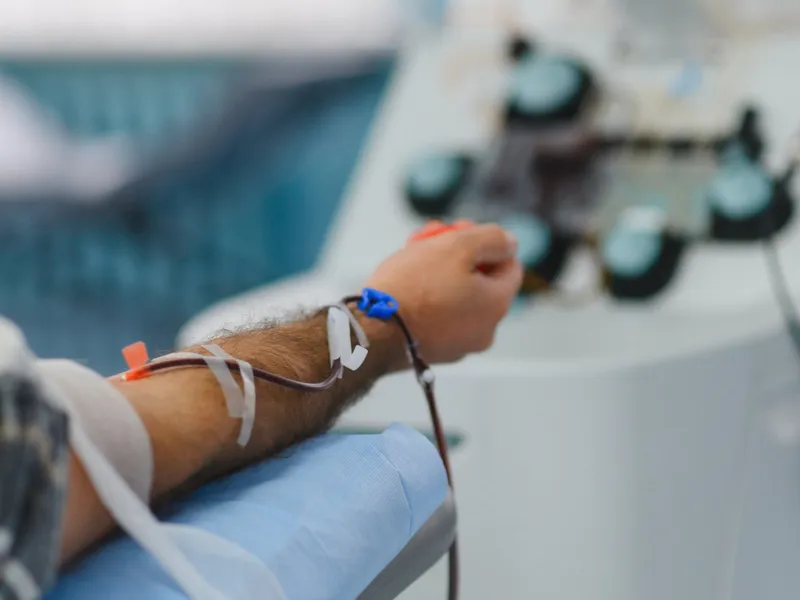
Treatment happens in our Scottsdale clinic, with no hospital stay. Your family member is reclined and awake in a treatment chair, with a standard IV in each arm placed by the nursing team. No surgical catheter or central line is needed for most outpatients. A Complete session runs approximately two to four hours. Most patients watch TV or use their phone.
Most patients begin with a series of three to six treatments. Response is reviewed as treatment progresses, and many patients then move to a maintenance membership. Lab work is reviewed before treatment and monitored throughout the course.
There is no separate "Alzheimer's clinic" here. Cognitive protocols run inside our PlasmaRestore™ TPE program, with the same nursing team, the same equipment, and the same physician oversight used for every plasma exchange patient we treat. The protocol was designed by Dr. Leslie F. Thomas, a Mayo Clinic-trained, board-certified nephrologist with more than 20 years of experience in therapeutic apheresis, and it follows the induction-then-maintenance cadence used in the published research.
In the 2025 real-world study, more than eight in ten sessions produced no side effects at all, and none of the side effects reported were serious. The most common problems were minor: bruising or irritation at the IV site, brief tingling in the lips or fingers from the anticoagulant, and tiredness on the day of treatment.
Age alone is not a barrier. A 2026 study specifically compared patients aged 75 and older with younger patients and found no significant difference in how well treatment was tolerated, even though the older group had considerably more heart and blood-pressure conditions. You can read our review of TPE safety in patients over 75, or the safety section of the evidence review.
Every PlasmaRestore™ Session
Everything below is included with all three protocols — Essential, Complete, and Advanced.
Your Calculated Plasma Volume Exchange
Essential (50%), Complete (100%), or Advanced (150%) — calculated for your body weight and hematocrit, not a flat liter count
Two Nurses Per Session
One dedicated solely to you for your full treatment, one managing everything else
Protocol Designed by a Board-Certified Nephrologist
20+ years of experience in apheresis and renal medicine overseeing every protocol
Candidacy
The research involved adults with mild-to-moderate Alzheimer's disease, and that is the group our physician team evaluates. Beyond the diagnosis itself, candidacy depends on general health, heart and blood-pressure history, current medications, whether veins can support treatment, and whether the person can sit comfortably through a two-to-four-hour session. All of that is reviewed before anything is recommended.
TPE is not a replacement for the care plan your neurologist has built. It is not a reason to stop a prescribed medication. We will ask you to keep your neurologist informed, and we are glad to share our protocol and monitoring approach with them directly.
And if we do not think this is right for your family member, we will say so at the consultation. There is no version of this where that conversation costs you anything.
For referring physicians
Avinity's cognitive TPE protocol is informed by the AMBAR phase 2b/3 randomized sham-controlled trial (Boada et al., Alzheimer's & Dementia 2020) and the 2025 real-world outpatient cohort published in the Journal of Alzheimer's Disease. We make no claim that TPE is an approved or established therapy for Alzheimer's disease, and patients are told so before treatment.
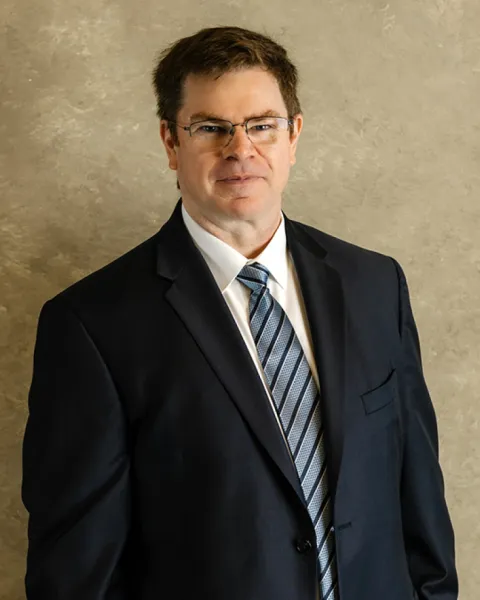
Protocols are designed and overseen by Leslie F. Thomas, MD, board-certified in Internal Medicine and Nephrology, Mayo Clinic-trained, with 20+ years of therapeutic apheresis experience. Screening includes pre-procedure laboratory review and cardiovascular and venous-access assessment; sessions are staffed by two nurses and monitored to ASFA standards, with post-session IV support included. Replacement fluid is 5% albumin.
We are happy to co-manage, to share protocol and monitoring documentation, and to route findings back to you. The full evidence base, including limitations, the mild-subgroup ambiguity, and cross-trial comparison caveats, is set out in our evidence review, which is the primary artifact we would ask you to read. Additional material is indexed in our TPE research library.
To discuss a patient, call 480-264-6175.
Cost
We publish our prices, because families deserve to know what they are walking into before they sit down with anyone.
Brain health protocols at Avinity are structured on PlasmaRestore™ Complete, a full calculated-plasma-volume exchange, at $10,500 per treatment, with membership pricing starting at $8,000 per treatment. Most patients begin with a series of three to six treatments, so the realistic question at consultation is the cost of a series rather than of one session. Our other protocols, Essential at $5,995 and Advanced at $14,995, exchange 50% and 150% of calculated plasma volume respectively and exist for different clinical purposes.
Every price includes the calculated plasma volume exchange, two nurses per session, protocol design by our board-certified nephrologist, pre-procedure lab review, post-session IV support, and ASFA monitoring standards. Nothing on that list is reserved for the higher tiers.
Avinity is a direct-pay clinic, and plasma exchange for Alzheimer's disease is not covered by insurance or Medicare. Because the FDA has not approved TPE for this indication, we are not aware of any insurer that currently covers it, and we would encourage you to treat any clinic that suggests otherwise with caution.
An exact quote for a treatment series comes out of the consultation, once we know what is clinically appropriate.
Book a Free ConsultationSee every package and membership price →
Read our guide to what drives plasma exchange cost →
No. Plasma exchange does not cure, reverse, or stop Alzheimer's disease, and nothing currently available does. What the studies showed is slower decline. Patients who received treatment lost ground more gradually than those who did not. Abilities that have already been lost do not come back. Any clinic that tells you otherwise is not being honest with you.
It may be worth discussing. The approved anti-amyloid drugs are limited to the earliest stages of Alzheimer's, so many families are told their loved one is too far along. In the AMBAR trial, the moderate-stage group showed the strongest response to plasma exchange, up to 61% slower cognitive decline. That is a research finding, not a guarantee, and TPE remains off-label and unproven for this use. But eligibility for TPE is assessed on different criteria than the drugs, so being turned down for Leqembi does not automatically rule it out. The consultation is where that gets answered honestly.
Nearly. Plasmapheresis is the general term for separating plasma from blood cells. Therapeutic plasma exchange is the version where the plasma that is removed is replaced with a substitute fluid, in our case 5% albumin. The Alzheimer's research studied plasma exchange with albumin replacement specifically, which is what we perform.
Brain health protocols are structured on PlasmaRestore™ Complete, which takes approximately two to four hours depending on calculated plasma volume. Your family member is reclined and awake the whole time. Post-session IV support is included in every PlasmaRestore™ protocol.
PlasmaRestore™ Complete, the protocol brain health programs are built on, is $10,500 per treatment, with membership pricing from $8,000 per treatment. Individual treatments across all three protocols range from $5,995 to $14,995. Most patients begin with a series of three to six treatments. Plasma exchange for Alzheimer's is not covered by insurance. Every price is published on our TPE pricing and packages page.
The evidence is reassuring. A 2026 study compared patients aged 75 and over with younger patients and found no significant difference in adverse events, despite the older group having significantly more hypertension and cardiac disease. In the 2025 Alzheimer's cohort, more than eight in ten of 514 sessions had no side effects and none were serious. That said, individual screening still matters more than any average. Heart history, medications, and vein quality are all reviewed before treatment. Read our review of TPE safety in patients over 75.
Yes, that is how we do it. Treatment takes place in our Scottsdale clinic with a standard IV in each arm. No hospital stay and, for most outpatients, no surgical catheter or central line. Your family member goes home the same day. For a first session it is wise to arrange a ride home until you know how they respond.
That is a physician decision, and not one we would answer with a blanket yes. Plasma exchange removes substances from the bloodstream, so timing relative to other therapies, particularly infused drugs such as lecanemab or donanemab, has to be considered individually. Bring a complete medication list to the consultation, and we will want your neurologist involved in the decision. Do not stop any prescribed medication in order to pursue TPE.
Location
Avinity Health is located at 11000 N. Scottsdale Road, Suite 100, convenient to Paradise Valley, North Scottsdale, Gainey Ranch, McCormick Ranch, and Phoenix. Families travel from throughout Arizona for physician-directed therapeutic plasma exchange through our PlasmaRestore™ program.
Every protocol is designed and overseen by Dr. Leslie F. Thomas, MD, board-certified in Internal Medicine and Nephrology, Mayo Clinic-trained, with more than 20 years of experience in therapeutic plasma exchange.
Our Location
11000 N. Scottsdale Road
Suite 100, Scottsdale, AZ
Mon–Fri 9:00 AM – 5:00 PM
Sat 9:00 AM – 12:00 PM
Sun Closed
Call Us
480-264-6175
The next step is a free consultation where we review your family member's history and records, talk through what the research does and does not show, and tell you honestly whether therapeutic plasma exchange is worth considering. Bring the neurologist's notes. Bring your questions. There is no commitment.
Call 480-264-6175 or book online.
Medical disclaimer: This page is for educational purposes and does not constitute medical advice. Therapeutic plasma exchange is not FDA-approved for the treatment of Alzheimer's disease and is used off-label under physician direction. Research findings described here reflect slowed decline observed in study populations; they are not a promise of individual results, and no outcome is implied or guaranteed. Do not start, stop, or change any prescribed treatment without consulting the physician managing your care.